Aniket Shah,
UX/UI Designer
Avidhrt Inc.
Human Factors Engineer
May 2020 - October 2021
East Lansing, USA
Business Objectives
- Atrial fibrillation (A-Fib) is an irregular and often rapid heart rate that can increase the risk of strokes, heart failure, and other heart-related complications.
- Approximately 6.1 million people in the United States have A-Fib with new cases being diagnosed at a rate of about 460,000 per year in the United States.
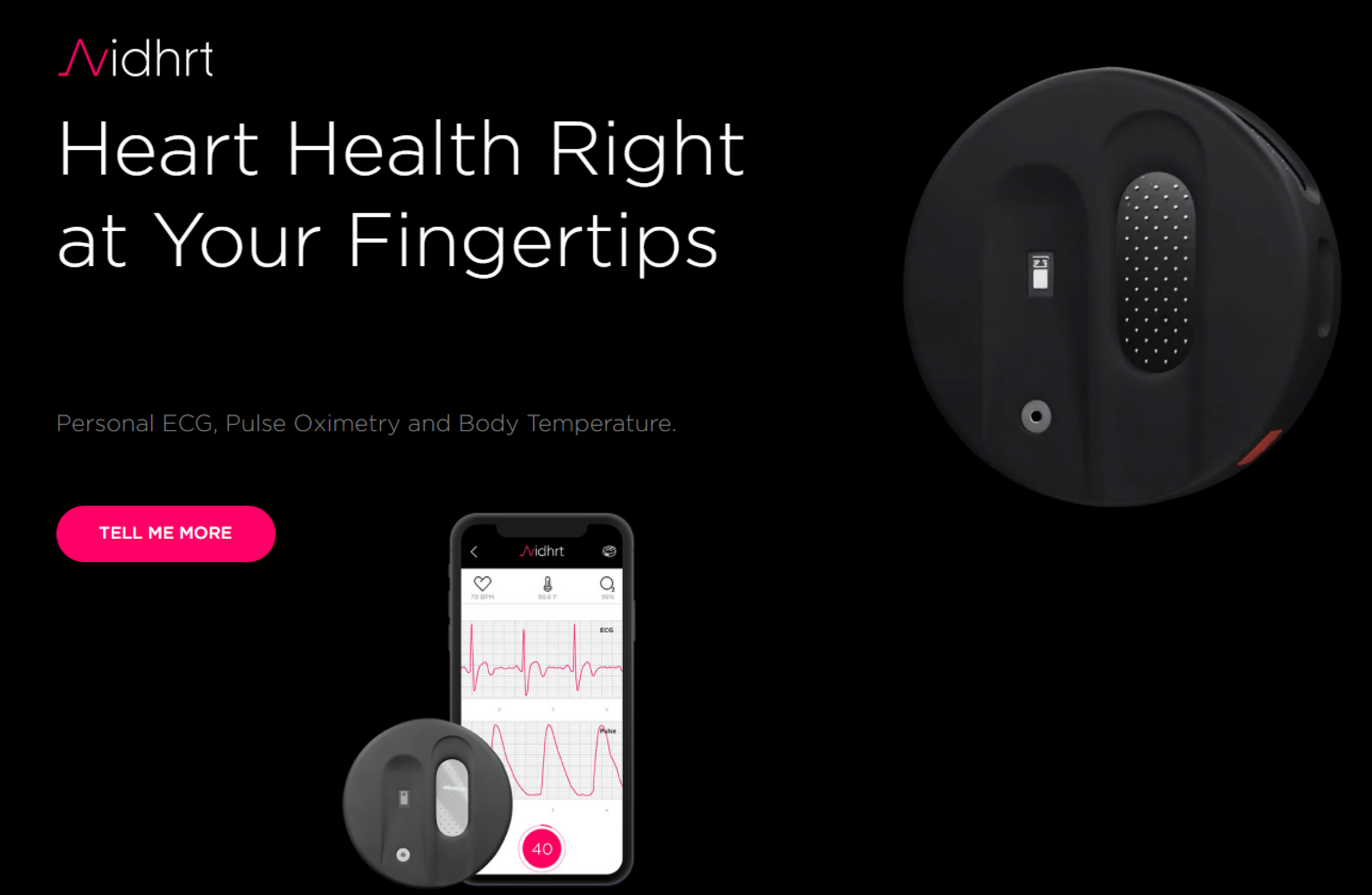
- Avidhrt’s solution was to create the Avidhrt Sense, a mobile, clinical-quality device with electrocardiogram (ECG), pulse oximeter (SpO2), and infra-red temperature sensors. The Avidhrt Sense aimed at early detection of A-Fib and other arrhythmias.
- Conducting conducting usability studies, QA testing, and the FDA 510k submission was the main objective. I was also involved with product testing, participant recruitment, data collection and analysis, design review, technical documentation, and liaising with the FDA consultants.
- Note: NDAs signed with company prohibit the sharingof product photos, usability study videos and findings.
Methodology
The aim was to understand the performance with the intended users and gain insights how to improve the overall usability of the Avidhrt Sense and its companion app.
All usability studies were conducted in accordance with ANSI/AAMI HE-75 (Human Factors Principles for Design of Medical Devices) and IEC 62366 (Application of Usability Engineering to Medical Devices), and approved by the local IRB.
Individual session timeline:
- Study overview and participant consent
- Task completion with verbal feedback
- Data collection (participant responses and feedback + video and audio recordings)
- Post-completion participant survey
- Data organisation and secure storage
STUDY
METHODOLOGY
Formative Study 1
Requirement: Test the usability of the Avidhrt Sense device (design and hardware) and its companion app (UI and software).
Participant Criteria:
- Control Group: People with no history of heart health issues (N=20)
- Target Group: People diagnosed with A-Fib (N=20)
Task:
- Mobile app Sign-up and Onboarding
- Bluetooth pairing of the Avidhrt Sense with the app
- Recording two ECG readings using the device
- Confirming recording and report on app
User Feedback:
- Users unhappy with a lengthy onboarding process
- Users struggled with device pairing instructions
- Users confused with interpreting reports
Formative Study 2
Requirement: Test the efficacy of the software updates to the onboarding and AI model, and UI updates based on the insights from the first formative study.
Participant Criteria:
- Control Group: People with no history of heart health issues (N=15)
- Target Group: People diagnosed with A-Fib (N=15)
Task:
- Same as that of the Formative Study 1
User Feedback:
- Users happy with shortened onboarding
- Users disappointed with device pairing struggles
- Users unhappy with incorrect alerts in reports
Temperature Study
Requirement: Test the efficacy of the temperature algorithm to detect a febrile person.
Participant Criteria:
- Control Group: Non-febrile adults (N=100)
- Target Group: Febrile adults (N=100)
Task:
- Recording two forehead temperature readings using the Avidhrt Sense device
User Feedback:
- Users struggled with measuring body temperature
Formative Study 3
Requirement: Test the software updates (temperature measurement and AI model) and UI updates based on insights from the second formative study.
Participant Criteria:
- Control Group: People with no history of heart health issues (N=15)
- Target Group: People diagnosed with A-Fib (N=15)
Task:
- Same as that of the Formative Study 2 and the Temperature Study
User Feedback:
- Users happy with updated UI with clear instructions
- Users happy with the new temperature measurement feature
- Users strugled with measuring body temerature
Summative Study
Requirement: Test the final software and UI updates to the companion app.
Participant Criteria:
- Control Group: People with no history of heart health issues (N=15)
- Target Group: People diagnosed with A-Fib (N=15)
Task:
- Same as that of the Formative Study 3
User Feedback:
- Users could successfully sign up and complete onboarding
- Users could complete recording ECG and temperature readings
- Users could view and share reports
Aniket Shah,
UX/UI Designer
Avidhrt Inc.
Human Factors Engineer
May 2020 - October 2021
East Lansing, USA
Business Objectives
- Atrial fibrillation (A-Fib) is an irregular and often rapid heart rate that can increase the risk of strokes, heart failure, and other heart-related complications.
- Approximately 6.1 million people in the United States have A-Fib with new cases being diagnosed at a rate of about 460,000 per year in the United States.
- Avidhrt’s solution was to create the Avidhrt Sense, a mobile, clinical-quality device with electrocardiogram (ECG), pulse oximeter (SpO2), and infra-red temperature sensors. The Avidhrt Sense aimed at early detection of A-Fib and other arrhythmias.
- Conducting conducting usability studies, QA testing, and the FDA 510k submission was the main objective. I was also involved with product testing, participant recruitment, data collection and analysis, design review, technical documentation, and liaising with the FDA consultants.
- Note: NDAs signed with company prohibit the sharingof product photos, usability study videos and findings.
Methodology
The aim was to understand the performance with the intended users and gain insights how to improve the overall usability of the Avidhrt Sense and its companion app.
All usability studies were conducted in accordance with ANSI/AAMI HE-75 (Human Factors Principles for Design of Medical Devices) and IEC 62366 (Application of Usability Engineering to Medical Devices), and approved by the local IRB.
Individual session timeline:
- Study overview and participant consent
- Task completion with verbal feedback
- Data collection (participant responses and feedback + video and audio recordings)
- Post-completion participant survey
- Data organisation and secure storage
STUDY
METHODOLOGY
Formative Study 1
Requirement: Test the usability of the Avidhrt Sense device (design and hardware) and its companion app (UI and software).
Participant Criteria:
- Control Group: People with no history of heart health issues (N=20)
- Target Group: People diagnosed with A-Fib (N=20)
Task:
- Mobile app Sign-up and Onboarding
- Bluetooth pairing of the Avidhrt Sense with the app
- Recording two ECG readings using the device
- Confirming recording and report on app
User Feedback:
- Users unhappy with a lengthy onboarding process
- Users struggled with device pairing instructions
- Users confused with interpreting reports
Formative Study 2
Requirement: Test the efficacy of the software updates to the onboarding and AI model, and UI updates based on the insights from the first formative study.
Participant Criteria:
- Control Group: People with no history of heart health issues (N=15)
- Target Group: People diagnosed with A-Fib (N=15)
Task:
- Same as that of the Formative Study 1
User Feedback:
- Users happy with shortened onboarding
- Users disappointed with device pairing struggles
- Users unhappy with incorrect alerts in reports
Temperature Study
Requirement: Test the efficacy of the temperature algorithm to detect a febrile person.
Participant Criteria:
- Control Group: Non-febrile adults (N=100)
- Target Group: Febrile adults (N=100)
Task:
- Recording two forehead temperature readings using the Avidhrt Sense device
User Feedback:
- Users struggled with measuring body temperature
Formative Study 3
Requirement: Test the software updates (temperature measurement and AI model) and UI updates based on insights from the second formative study.
Participant Criteria:
- Control Group: People with no history of heart health issues (N=15)
- Target Group: People diagnosed with A-Fib (N=15)
Task:
- Same as that of the Formative Study 2 and the Temperature Study
User Feedback:
- Users happy with updated UI with clear instructions
- Users happy with the new temperature measurement feature
- Users strugled with measuring body temerature
Summative Study
Requirement: Test the final software and UI updates to the companion app.
Participant Criteria:
- Control Group: People with no history of heart health issues (N=15)
- Target Group: People diagnosed with A-Fib (N=15)
Task:
- Same as that of the Formative Study 3
User Feedback:
- Users could successfully sign up and complete onboarding
- Users could complete recording ECG and temperature readings
- Users could view and share reports